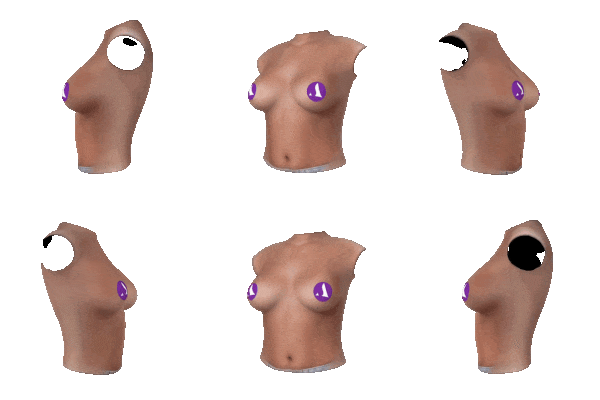
Pregnancy, breastfeeding, weight changes, aging, genetics, and gravity can all affect how the breasts look and where they sit on the chest. For some women, these changes are subtle. For others, they can lead to sagging, stretched skin, downward-facing nipples, asymmetry, or a loss of the breast shape they once had.
If these changes are affecting how you feel about your appearance, you may be considering a breast lift in Las Vegas. A breast lift, medically known as mastopexy, raises and reshapes the breasts by removing excess skin and supporting the remaining breast tissue. Depending on your anatomy, the nipple and areola may also be repositioned to create a more elevated and balanced breast contour.
A breast lift is not primarily intended to make the breasts larger. Instead, it focuses on improving breast position, shape, proportion, and the effects of stretched skin. Understanding what a lift can and cannot change is an important first step in deciding whether the procedure may be right for you.
What Is a Breast Lift?
A breast lift, or mastopexy, is a surgical procedure that reshapes breasts that have lost firmness or begun to sag. Excess skin is removed, the underlying breast tissue is lifted and reshaped, and the nipple and areola can be moved to a more appropriate position when necessary.
Changes in breast shape can occur for many reasons, including pregnancy, breastfeeding, aging, weight fluctuations, gravity, and heredity. These changes can affect both skin elasticity and the position of the breast tissue, which is why two patients with similar concerns may ultimately require different surgical approaches.
A lift also differs from breast augmentation. If you are satisfied with your breast size but not where your breasts sit, a lift alone may be worth considering. If you would also like more volume or upper-breast fullness, your surgeon may discuss combining a breast lift and breast augmentation.
1. Your Breasts Sit Lower Than They Used To
A noticeable change in breast position is one of the most common reasons women explore mastopexy. Breasts that previously appeared firmer or higher can gradually settle lower after pregnancy, breastfeeding, weight loss, or natural aging.
Plastic surgeons evaluate several features when determining whether sagging is present, including nipple position, skin quality, breast shape, and the relationship between the nipple and the natural crease beneath the breast. The American Society of Plastic Surgeons identifies flattened or elongated breasts, stretched skin, downward-pointing nipples, and nipples that fall below the breast crease as common signs that someone may be a candidate for a lift.
If you are generally comfortable with your breast volume but would prefer a firmer, more elevated position, a consultation can help determine whether mastopexy may address that concern.
2. Your Nipples Point Downward or Sit Below the Breast Fold
Nipple position can provide another indication of breast sagging. As skin stretches and breast tissue descends, the nipples may begin pointing downward rather than forward or may sit at or below the inframammary fold beneath the breast.
A breast lift can reposition the nipple and areola as the breast itself is reshaped. The amount of correction required varies from patient to patient, so the appropriate incision pattern and surgical technique should be based on your breast size, degree of sagging, skin elasticity, and nipple position.
This is one reason photographs alone cannot determine whether you need a breast lift. An in-person evaluation provides information about your tissue, skin quality, proportions, and anatomy that cannot be fully assessed from an image.
3. Pregnancy or Breastfeeding Changed Your Breast Shape
Breast changes following pregnancy are extremely common. The breasts often increase in volume during pregnancy and breastfeeding, then become smaller afterward, sometimes leaving stretched skin around a reduced amount of breast tissue.
This can create a softer or less elevated appearance even if your overall breast size has not changed dramatically. A lift may address excess skin and lower breast position, while augmentation may also be considered when restoring volume is an important part of your goal.
Some women considering breast surgery after pregnancy may also be researching a mommy makeover. A mommy makeover is not a single standardized procedure. It is a customized combination of breast and body procedures selected according to the patient’s anatomy, concerns, overall health, and recovery considerations.
If you are planning another pregnancy in the near future, discuss your plans before scheduling surgery. Pregnancy and breastfeeding can change breast volume and stretch the skin again, which may alter the appearance of a previous lift.
4. Weight Loss Has Left You With Loose Breast Skin
Significant weight loss can change the appearance of the breasts because breast tissue contains fat. As volume decreases, previously stretched skin may not contract completely around the remaining tissue.
The breasts may consequently appear flatter, elongated, or lower on the chest. For patients whose weight has stabilized, mastopexy may help remove excess skin and reshape the remaining breast tissue.
Weight stability is important because substantial future weight gain or loss can continue to change breast size and skin tension. If you are actively working toward a significant weight-loss goal, tell your surgeon so the timing of surgery can be discussed appropriately.
5. One Breast Sits Lower Than the Other
Some natural difference between the breasts is normal, and perfect symmetry is uncommon. Pregnancy, aging, changes in weight, and differences in tissue elasticity can make existing asymmetry more noticeable over time.
Breast lift surgery may improve differences in nipple height, breast position, or overall contour because each breast can be approached according to its individual anatomy. However, surgery cannot guarantee perfectly identical breasts, and realistic expectations should be part of the consultation process.
Reviewing before and after plastic surgery photographs can help you understand the type of improvement that may be possible. The most useful examples are photographs of actual patients who began with breast anatomy and concerns reasonably similar to your own.
6. You Like Your Breast Size but Not Their Position
Some women initially believe they need implants because their breasts look less full than they once did. In reality, the main issue may be breast position rather than insufficient volume. Think about how you feel about your breasts in a supportive bra. If you like their size but prefer the higher position created by support, a lift without implants may be an option worth discussing.
If your goals also include increased volume, projection, or upper-breast fullness, breast augmentation may be considered with a lift. According to the American Society of Plastic Surgeons, implants can be used alongside breast lift surgery to provide additional upper-breast fullness when appropriate.
7. You Are Healthy and Have Realistic Expectations
Breast lift candidacy involves more than cosmetic concerns. Good candidates are generally physically healthy, maintain a stable weight, do not smoke, and understand what the procedure can realistically accomplish.
Your medical history, medications, supplements, previous surgeries, breast health, nicotine use, and other health considerations should be discussed during your consultation. Depending on your circumstances, preparation may include medical evaluation, mammography, medication adjustments, and stopping smoking before surgery.
A breast lift can improve breast position and contour, but it cannot stop aging or prevent future changes caused by pregnancy, weight fluctuations, or changes in skin elasticity. A responsible surgical consultation should address both potential benefits and limitations.
Breast Lift vs. Breast Augmentation: Which Is Right for You?
The easiest way to understand these procedures is to consider position versus volume. A breast lift primarily raises and reshapes existing tissue, while breast augmentation primarily adds volume and projection.
Patients with sagging but adequate breast volume may benefit from a lift alone. Someone who has both sagging and significant volume loss may discuss combining mastopexy with breast augmentation, while another patient may discover that augmentation alone is more consistent with her goals.
Choosing between these procedures should not be based only on a social media photo or another patient’s experience. Your breast width, existing tissue, nipple position, skin elasticity, proportions, and desired outcome should guide the treatment plan.
What Are the Risks of Breast Lift Surgery?
Like every surgical procedure, breast lift surgery carries potential risks. These can include anesthesia complications, bleeding or hematoma, infection, changes in breast or nipple sensation, breast asymmetry, contour irregularities, fluid accumulation, delayed wound healing, fat necrosis, blood clots, and the possible need for revision surgery. Rare complications can include partial or complete loss of the nipple or areola.
Scarring should also be expected because a true breast lift requires surgical incisions. Your personal risk profile depends on your anatomy, health, surgical technique, and other factors, so the risks that apply to you should be discussed directly with your surgeon before making a decision.
The American Society of Plastic Surgeons recommends asking specifically about potential complications and how they would be managed. Understanding risk is an important part of informed consent and should be addressed before surgery rather than after a procedure has been scheduled.
What Does Breast Lift Recovery Look Like?
Breast lift recovery occurs in stages rather than on a single timeline. Smith Plastic Surgery currently lists an estimated recovery time of approximately one to two weeks for breast lift procedures, although that should not be interpreted as complete internal healing.
During the early recovery period, patients may have swelling, tenderness, bruising, tightness, and temporary changes in sensation. A support bra or elastic garment may be recommended, and patients receive specific instructions about incision care, medications, activity, and follow-up visits.
Returning to work and returning to unrestricted physical activity are also different milestones. Your occupation, surgical plan, healing progress, and whether additional procedures were performed can all affect how quickly you return to normal routines.
What Is the Average Cost of a Breast Lift?
The average cost of breast lift surgery can be difficult to interpret because advertised figures do not always include the same expenses. Surgeon fees, anesthesia, operating-room costs, surgical complexity, geographic location, and whether implants are included can all affect the final price.
Smith Plastic Surgery currently lists breast lift pricing starting at approximately $20,900without implants and $20,900 with implants. The practice states that its published pricing includes surgical fees, anesthesia, and operating-room fees, while medications and required clearance testing are separate.
When comparing breast lift surgery cost, ask precisely what the quoted figure includes. Price matters, but it should be considered alongside surgeon qualifications, experience, facility accreditation, safety standards, communication, and your confidence in the proposed treatment plan.
Choosing a Qualified Breast Lift Surgeon in Las Vegas
When searching for a breast lift surgeon in Las Vegas, credentials deserve careful attention. The American Society of Plastic Surgeons recommends selecting a plastic surgeon certified by the American Board of Plastic Surgery and confirms that ASPS member surgeons must meet specific training, continuing education, and facility standards.
Dr. Lane F. Smith is certified by the American Board of Plastic Surgery and is listed as a member of the American Society of Plastic Surgeons. His training includes a plastic surgery residency at Mayo Clinic and a facial plastic and reconstructive surgery fellowship at Stanford University. His professional profile also lists board certifications in otolaryngology and facial plastic and reconstructive surgery.
These credentials are particularly relevant for a patient evaluating plastic surgery in Las Vegas because choosing a surgeon involves more than comparing photographs or prices. Training, board certification, surgical experience, facility standards, communication, and a clear discussion of risks should all contribute to your decision.
An Accredited Las Vegas Surgical Facility
Smith Plastic Surgery has an on-site surgical facility at its Las Vegas practice. The facility is fully accredited by Global Accreditation Authority, QUAD A, formerly known as AAAASF, and the practice states that it is accredited for anesthesia and sedation including general anesthesia.
The practice also reports that its surgical staff are certified in Advanced Cardiac Life Support and that experienced board-certified anesthesiologists are used for additional patient safety. Having the consultation, surgical facility, and postoperative care within the same practice location can also provide continuity throughout the surgical process.
Smith Plastic Surgery is located at 7650 W. Sahara Avenue, Las Vegas, Nevada 89117, and its website identifies service areas that include Las Vegas, Summerlin, Henderson, and Anthem.
Questions to Ask During Your Breast Lift Consultation
Your consultation should help you understand not simply whether you can have surgery, but whether the proposed procedure actually addresses your concerns. Useful questions include:
Am I a good candidate for a breast lift?
Would a lift alone address my goals, or should I consider augmentation?
Which breast lift technique would you recommend for my anatomy, and why?
Where will my scars be located?
What risks are most relevant to me?
How long should I plan to take away from work and exercise?
How could future pregnancy affect my results?
Could this procedure affect breastfeeding?
What is included in my surgical quote?
Can I see before and after photographs of patients with similar anatomy?
The American Society of Plastic Surgeons recommends discussing many of these same issues, including surgeon certification, facility accreditation, recovery, risks, breastfeeding, and realistic outcomes.
Frequently Asked Questions About Breast Lift Surgery
Can I get a breast lift without implants?
Yes. A breast lift can be performed without implants when your main concern is sagging or breast position and you are satisfied with your existing volume. If you also want more fullness or a larger breast size, augmentation may be discussed as an additional option.
Can I breastfeed after a breast lift?
Breastfeeding may still be possible after a breast lift, but it cannot be guaranteed. The impact can depend on your anatomy, the surgical technique used, and how the procedure affects milk-producing tissue and ducts, which is why ASPS recommends specifically discussing breastfeeding with your surgeon before mastopexy.
If future breastfeeding is important to you, make that clear during your consultation. Your surgeon can explain how the planned technique may affect your individual circumstances and whether timing surgery around future pregnancy should be considered.
Will I have scars?
Yes. Breast lift surgery requires incisions, and incision lines are permanent, although they generally fade and improve with time. The appropriate scar pattern depends on factors such as breast size, skin quality, nipple position, and the degree of lifting required.
Can mastopexy improve uneven breasts?
A breast lift may improve differences in breast position, shape, or nipple height. Complete symmetry cannot be guaranteed because natural differences in anatomy and individual healing will continue to influence the result.
How long do breast lift results last?
Results can be long-lasting, but surgery cannot stop natural aging. Pregnancy, weight fluctuations, gravity, heredity, and changes in skin elasticity can continue affecting the breasts over time.
Is Breast Lift Surgery Right for You?
If your breasts have changed after pregnancy, weight loss, breastfeeding, aging, or other life events, the most useful question is not simply whether you need a lift. It is which specific changes bother you and which procedure can realistically address them.
For some patients, the answer may be a breast lift alone. Others may benefit from augmentation, reduction, or a combination approach, while some may decide that surgery is not the right choice at this stage of life.
At Smith Plastic Surgery, Dr. Lane Smith provides breast surgery consultations for patients considering mastopexy, breast augmentation, and other cosmetic breast procedures. The practice is located at 7650 W. Sahara Avenue in Las Vegas, with patients also traveling from communities including Summerlin, Henderson, and Anthem.
To discuss your goals and determine whether breast lift surgery may be appropriate for you, call 702-838-2455 or request a consultation with Smith Plastic Surgery. A consultation provides the opportunity to discuss your anatomy, potential scars, expected recovery, costs, risks, future pregnancy plans, and the result you are hoping to achieve before deciding how to proceed.
About Dr. Lane Smith
Lane F. Smith, MD, FACS is a Las Vegas plastic surgeon certified by the American Board of Plastic Surgery and a member of the American Society of Plastic Surgeons. His surgical training includes a plastic surgery residency at Mayo Clinic and a fellowship in facial plastic and reconstructive surgery at Stanford University.
Dr. Smith practices at Smith Plastic Surgery Institute in Las Vegas, where breast procedures include breast lift, breast augmentation, breast reduction, corrective breast surgery, and related breast procedures. The practice’s established brand approach emphasizes patient education, realistic expectations, transparency, and patient-centered care.